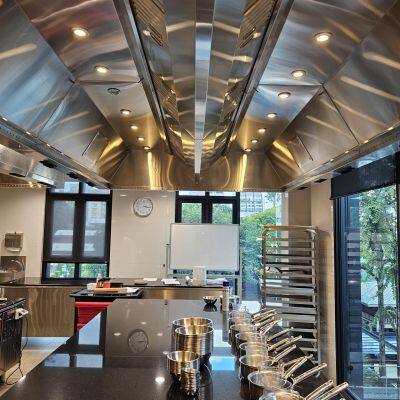
Commercial kitchens are energy hogs—accounting for 30–40% of a restaurant’s total energy use, according to the EPA. And of that, ventilation systems (hoods, fans, ductwork) are the single biggest culprit, using more energy than refrigerators or cooking equipment combined. For operators already squeezed by rising food and labor costs, wasted energy is a drain on profitability. But there’s good news: energy-efficient commercial kitchen ventilation systems let you slash energy bills by 30–50%—without compromising on safety, compliance, or performance. This post breaks down the key features of energy-efficient systems, how to calculate your potential savings, and how to avoid common mistakes when upgrading.
Let’s start with the numbers. A standard commercial kitchen with two 10-foot hoods (equipped with fixed-speed fans) uses approximately 12,000–15,000 kWh of electricity annually. At the average U.S. commercial electricity rate of $0.12/kWh, that’s $1,440–$1,800 per year just for ventilation. For a chain with 10 locations, that’s $14,400–$18,000 in unnecessary costs.
But energy inefficiency isn’t just about money—it’s also about:
Sustainability: Reducing energy use cuts your carbon footprint. A 40% energy reduction in ventilation translates to 3–4 tons fewer CO2 emissions per kitchen annually (equivalent to planting 75–100 trees).
Equipment Longevity: Overworked fans (running at full speed 24/7) wear out faster, leading to more frequent replacements. Energy-efficient systems reduce fan stress, extending their lifespan by 3–5 years.
Comfort: Traditional systems often create loud noise (from high-speed fans) and drafty conditions (from excessive airflow). Energy-efficient designs reduce noise and balance air flow, improving staff comfort and retention.
Not all “energy-efficient” claims are equal. Look for these proven features to ensure you’re getting real savings:
As discussed in the smart ventilation post, variable-speed motors are the backbone of energy efficiency. Unlike fixed-speed motors (which run at 100% capacity even when not needed), variable-speed motors adjust their speed based on cooking activity. Here’s how they save energy:
Idle Hours: When the kitchen is closed or slow (e.g., 2–5 PM for a breakfast/lunch spot), the motor drops to 30–40% speed—cutting energy use by 60–70%.
Low-Heat Cooking: For ovens, steamers, or microwaves (low smoke/heat), speed stays at 50–60%—enough to meet NFPA 96 standards without wasting power.
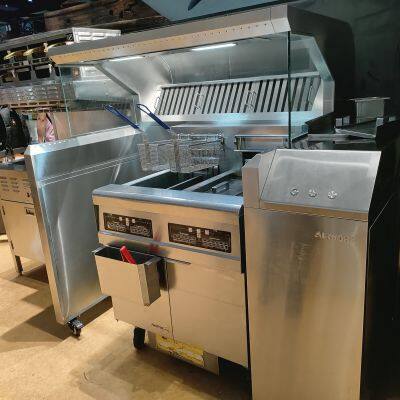
Peak Hours: For grills, fryers, or charbroilers (high smoke), speed ramps up to 90–100% to ensure compliance.
Brands like ECM (Electronically Commutated Motor) fans are the gold standard here—they’re 20–30% more efficient than standard AC motors and have built-in speed controls. A study by the FSTC found that ECM-equipped hoods use 35–50% less energy than fixed-speed models.
Commercial kitchen ventilation systems expel massive amounts of heat—heat that’s often wasted. Heat recovery systems capture this warm air and reuse it to:
Heat the Building: In cold climates, recovered heat can warm dining areas or staff rooms, reducing reliance on furnaces.
Preheat Water: Many kitchens use 100+ gallons of hot water daily for cleaning. Heat recovery systems preheat cold water before it reaches the water heater, cutting water heating costs by 20–30%.
For example, a restaurant in Minnesota installed a heat recovery system (by Therma) on its 12-foot grill hood. The system captures heat from the exhaust and uses it to preheat the kitchen’s hot water tank. Results: $650 in annual savings on water heating costs, plus $400 in savings on building heating.
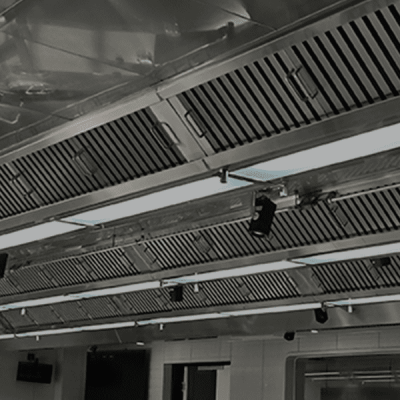
Grease filters are critical for compliance—but low-quality filters create airflow resistance, forcing fans to work harder (and use more energy). High-efficiency filters solve this by:
Capturing More Grease: Baffle filters (the most efficient type) capture 90%+ of grease particles, reducing buildup in ducts and fans (which also improves fan efficiency).
Minimizing Airflow Loss: Smooth, aerodynamic designs let air pass through easily—so fans don’t need to overwork to maintain CFM rates.
Avoid mesh or fiberglass filters—they clog quickly, increase airflow resistance, and need frequent replacement. Baffle filters (made of stainless steel) are more durable (last 5–7 years) and energy-efficient.
Demand-Controlled Ventilation (DCV) takes variable-speed technology a step further by using sensors to “learn” your kitchen’s patterns. Sensors monitor:
Cooking Equipment Usage: Which equipment is on/off (e.g., grill is on, fryer is off).
Smoke/Heat Levels: Real-time particulate and temperature data.
Time of Day: Peak vs. off-peak hours.
The system then adjusts airflow automatically—no manual input needed. For example, a DCV system at a hotel kitchen might learn that the breakfast rush uses only the oven and steamer (low airflow needed), while dinner uses all equipment (high airflow). Over time, DCV optimizes savings by aligning ventilation with your unique schedule.
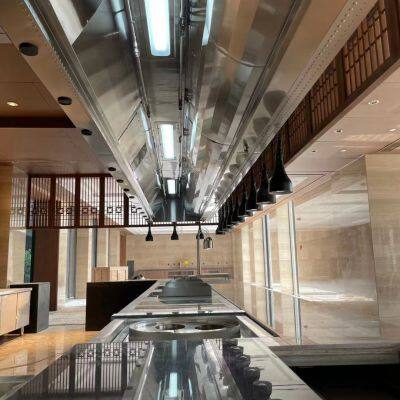
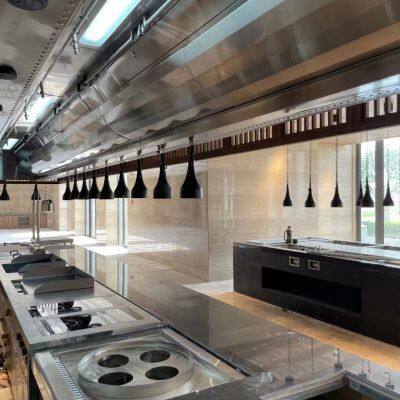
The shape of the hood itself impacts energy efficiency. Poorly designed hoods (e.g., shallow depth, sharp edges) allow smoke to escape, forcing fans to run faster to compensate. Energy-efficient hoods have:
Deep Cavities: Capture smoke before it spreads, reducing the need for high airflow.
Curved Edges: Minimize air turbulence, letting air flow smoothly into the exhaust.
Sealed Duct Connections: Prevent air leaks (leaks force fans to work harder to maintain CFM).
Brands like Halton and exhausto offer aerodynamic hoods that reduce airflow requirements by 15–20% compared to standard designs—without sacrificing smoke capture.
Wondering how much you could save by upgrading to an energy-efficient system? Use this simple formula:
Annual Energy Savings = (Current kWh Usage – Efficient kWh Usage) × Electricity Rate
To get your current kWh usage:
Check your utility bill for monthly electricity use (kWh) for the kitchen.
Estimate what percentage of that is used for ventilation (30–40% for most kitchens).
Multiply by 12 to get annual ventilation kWh.
Example:
Current kitchen electricity use: 500 kWh/month
Ventilation share: 35% (175 kWh/month)
Annual ventilation kWh: 2,100
Efficient system reduces use by 40%: 2,100 × 0.6 = 1,260 kWh/year
Savings: (2,100 – 1,260) × $0.12 = $100.80/year per hood
If you have two hoods, that’s $201.60/year—plus additional savings from heat recovery or reduced maintenance. For high-volume kitchens, savings can exceed $1,000/year.
Choosing the Wrong Size Hood: A hood that’s too small will require higher airflow (wasting energy) to capture smoke. A hood that’s too large will expel more air than needed. Work with a contractor to size the hood based on your equipment (e.g., total linear feet of cooking surfaces).
Ignoring Installation Quality: Even the most efficient system will waste energy if installed poorly (e.g., leaky ducts, misaligned fans). Hire a certified ventilation contractor (look for IKECA membership) to ensure proper installation.
Focusing Only on Initial Cost: Energy-efficient systems cost 10–20% more upfront than traditional models—but they pay for themselves in 2–3 years. Don’t skimp on quality to save $500 upfront; you’ll lose more in energy costs long-term.
Forgetting Maintenance: Dirty filters or clogged ducts reduce efficiency. Stick to a regular maintenance schedule (daily filter cleaning, quarterly professional duct cleaning) to keep the system running at peak efficiency.